
Comprehensive Guide to Arecanut Plantation Management in the Malnad Region
Managing a mature arecanut garden in the undulating terrain of the Malnad region requires a disciplined, season-focused approach. Success depends heavily on proactive disease management, balanced nutrition, and precise water management tailored to the local monsoon patterns.
1. Monsoon & Pre-Monsoon Disease Management
The heavy Malnad rainfall creates high humidity, making plantations exceptionally vulnerable to fungal infections like Kolroga (Fruit Rot) and Inflorescence Dieback.
- Pre-Monsoon Prophylaxis: Apply a thorough round of 1% Bordeaux mixture across the entire garden before the heavy monsoon rains set in (ideally completed by mid-to-late June). Ensure coverage reaches the crown, bunches, and leaves.
- Sticker Application: Always mix a reliable adhesive/sticker with your sprays during the monsoon so the fungicide washes off less easily during continuous showers.
- Post-Monsoon Follow-ups: Inspect bunches regularly. If localized rotting appears, secondary protective sprays using copper oxychloride or systemic combinations (such as Solomon or Saaf, depending on the specific pest or secondary fungal threat) can help contain the spread.
2. Structured Nutrition & Fertilization Schedule
Arecanut palms heavy-feed throughout the year, especially during active growth and nut-development phases.
- Macronutrients: Apply split doses of Nitrogen, Phosphorus, and Potassium (NPK). A common practice is applying organic manure (FYM or compost) combined with rock phosphate and neem cake during the early monsoon or post-monsoon recovery phase.
- Micronutrients & Biostimulants: Incorporate targeted foliar sprays and root-feeding schedules during dry windows to boost plant immunity and yield quality.
- Soil PH Management: Malnad soils tend to be acidic due to high rainfall and leaching. Regular application of agricultural lime or dolomite every 2 to 3 years helps maintain an optimal soil pH for nutrient uptake.
3. Water Management & Drainage
While arecanuts love moisture, stagnant water is detrimental to root health and invites root rot (Ganoderma).
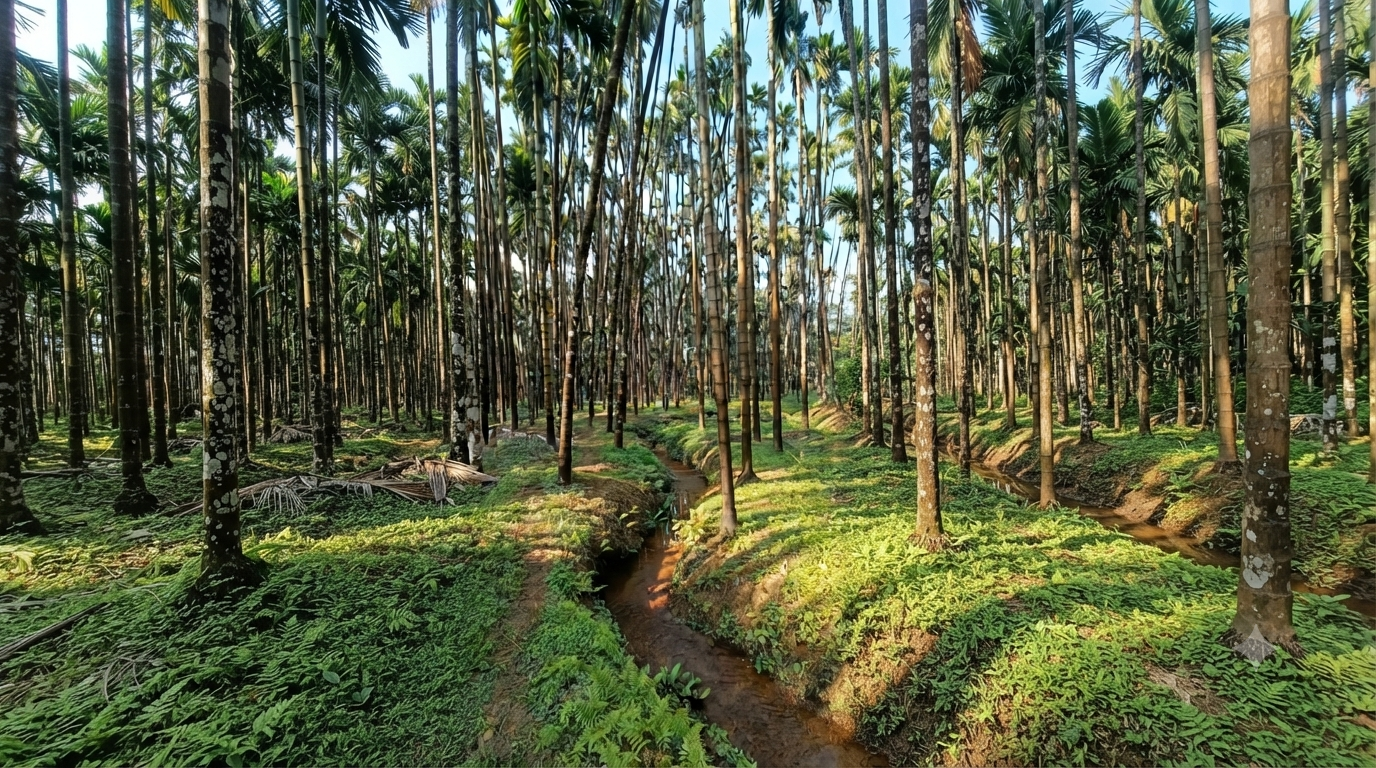
- Monsoon Drainage: Ensure proper sloping and clearing of cross-drainage channels across your plantation blocks to prevent waterlogging during torrential downpours.
- Summer Irrigation: During dry summer months, provide regulated basin or drip irrigation. Over-irrigation followed by sudden dry spells can cause cracking or premature nut drop.
4. Weed Control & Intercultivation
- Basal Maintenance: Keep palm bases clear of dense weed growth to prevent moisture traps and to make fertilizer application efficient.
- Light Tillage: Gentle intercultivation or slashing during the post-monsoon period helps aerate the soil and incorporates organic matter without damaging the shallow root system of the palms.
Pro-Tip for Malnad Planters: Keep a close daily watch on local micro-climate shifts and humidity spikes during the monsoon. Timely preventive spraying always yields better results and lower input costs than curative treatments after an outbreak takes hold.